
7 Critical Telco Roles That OSP Engineers Excel At in 2026
In the world of Internet Service Providers (ISPs) and telecom companies, a fast, reliable network is the backbone of success. Behind the scenes, two engineering roles keep that network efficient, secure, and resilient: Outside Plant (OSP) Engineers and Facilities Engineers. In 2026, with fiber rollouts accelerating, 5G Standalone maturing, and AI-driven data centers straining power grids, their work matters more than ever. Here is what they do, and how they use GIS, AI-assisted mapping, drones, and digital twins to plan fiber networks, keep power available, and protect colocation and communications room facilities.
What is an OSP Engineer?
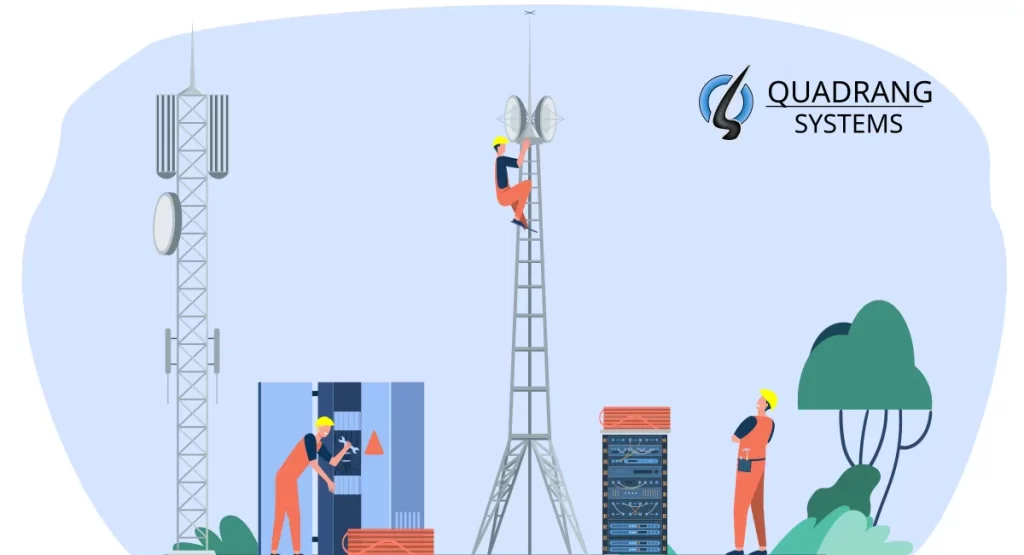
An Outside Plant Engineer (OSP/OPE) designs, plans, and maintains the physical infrastructure behind an ISP or telecom network. This includes cables, conduits, poles, towers, manholes, and the other equipment that connects homes and businesses to the network. Today that increasingly means dense FTTH/FTTx builds, fiber backhaul for 5G small cells, and routes serving edge data centers.
What is a Facilities Engineer?
A Facilities Engineer designs, plans, builds, maintains, and operates the buildings, facilities, and supporting infrastructure inside an ISP or telco: exchanges, data centers, colocation sites, wireless high sites, and customer comms rooms. Their work overlaps heavily with OSP engineering, and both roles share one goal: keeping the facility efficient, safe, and compliant with regulations.
Duties and Responsibilities of Facilities and OSP Engineers
The duties below are the ones these engineers most commonly handle. In larger organizations, OSP and Facilities Engineers are often separate people. In smaller ones the roles are combined, and the same person is often the fiber optic engineer too.
1) Site Survey and Feasibility Assessment
Whenever a new network is built or an existing one expanded, the OSP engineer surveys the area. In 2026 the survey starts at the desk, with GIS platforms, high-resolution satellite imagery, street-level imagery, and AI-assisted route analysis that flag obstacles before anyone visits. Drones and LiDAR increasingly supplement field walkthroughs, especially for poles, towers, and rooftops. The engineer then submits a detailed feasibility report covering anything that could hinder or delay the build: road works, right-of-way constraints, flood-prone areas, or congested ducts.
2) Physical Network Design
OSP and Facilities engineers design the layout of the proposed network: the best cable routes, the optimal placement of ducts, conduits, poles, and towers, and the performance and reliability specifications the network must meet. Good physical design protects infrastructure from damage and weather while keeping routes short. Modern design tools produce as-built records and digital twins, so a network’s physical layout can be searched, audited, and updated as it changes. Route diversity and climate resilience (flooding, heat, storms) are now standard design considerations rather than afterthoughts.
3) Infrastructure Maintenance
A good engineer designs for the day something breaks. Placement must allow easy access for maintenance, because once a facility is live, Facilities Engineers oversee its upkeep: maintenance schedules, repair coordination, and making sure equipment and systems keep running. Telecom infrastructure typically lives in data centers, colocation sites, and customer comms rooms, where this work happens. Remote monitoring and predictive maintenance, using sensor data to catch failing batteries, overheating racks, or degrading fiber before they cause outages, now complement traditional preventive schedules.
4) Access, Permits, and Right-of-Way
OSP and Facilities engineers work with local authorities and companies to secure construction permits and negotiate rights-of-way for laying cable or erecting infrastructure on public or private land. They also deal with building owners, building facilities engineers, custodians, and caretakers, since sites may be owned or leased. Some sites use a dedicated security company that controls third-party access. Strong relationships with these gatekeepers make the difference during an emergency at 2 a.m. Access matters most at data centers, colocations, and customer comms rooms, where physical security and access logging are now tighter than ever.
5) Material Quality, Procurement Advice, and Cost Estimation
OSP and Facilities engineers advise on the right materials for both outside plant and indoor IT, network, and telecom infrastructure. Procurement teams or network managers sometimes make these calls, but survey results and engineering advice are critical to ordering the correct parts. This covers cables, conduits, enclosures, racks, UPS systems, batteries (with lithium-ion and LFP chemistries now common), cooling equipment, and other hardware. With supply chains and prices still volatile, accurate material specs matter more.
Engineers also estimate the cost of building and maintaining infrastructure, such as digging a duct for fiber or constructing a manhole for a fiber loop. These estimates drive budgets and decide whether an expansion or upgrade is feasible.
6) Power Management
Power is one of the biggest challenges in telecom today. Facilities Engineers analyze how much power each hosted colocation customer or wireless high site needs, which equipment runs on AC versus DC, and how much UPS and battery capacity is required for a given backup duration. They make sure power bills are paid on time and deal with sites suffering frequent outages. With AI workloads and edge computing pushing power density up and grid capacity down, they increasingly plan for generators, solar-plus-storage, and smarter load management to keep sites online.
7) Health, Safety, and Compliance
Health and safety is a legal requirement in many countries wherever outdoor infrastructure or work at height is involved. Reflective clothing, helmets, gloves, safety footwear, and other protective gear are essential, and OSP and Facilities engineers must ensure that other field technicians have them too. Protecting occupants, field staff, and themselves is a top priority. Knowing when to visit a site, and when not to, is just as important:
- Do not climb high-site towers or masts in the evening or in darkness.
- Avoid touching bare metal during rain.
- Stay out of waterlogged areas.
- Visit rooftops only with, or in the presence of, the custodian or site caretaker.
These protocols and inspections keep operations compliant with the safety regulations of the country they operate in.
How OSP Engineers Lead Sustainability and Green Initiatives
By 2026, sustainability has moved from a talking point to an operational and regulatory expectation in telecom. OSP and Facilities Engineers are at the forefront, implementing:
- Energy-efficient cooling: Optimized airflow, free cooling, and higher-efficiency systems in data centers and comms rooms
- Solar-powered remote sites: Solar and battery storage for wireless and off-grid infrastructure
- Eco-friendly materials: Longer-life, recyclable, and lower-impact components
- Smart power management: Monitoring and automation that cut energy waste without risking uptime
Companies that prioritize sustainability gain a competitive edge, lower operating costs, and a stronger pull on top talent.
Why OSP Engineers Will Be More Valuable Than Ever in 2026
Fiber expansion, 5G Standalone, IoT, edge computing, and AI-driven data center growth are creating sustained demand for skilled Outside Plant Engineers. Automation can speed up design and analysis, but it cannot walk a route, negotiate with a caretaker, or judge whether a site is safe. These professionals combine:
- Technology proficiency: GIS, mapping, drone and LiDAR data, digital twins, and design software
- Technical expertise: Fiber optics, power systems, and network infrastructure
- Project management skills: Delivering complex, multi-site deployments on time and on budget
- Regulatory knowledge: Permits, rights-of-way, and compliance
- Environmental awareness: Sustainable and climate-resilient design
To Conclude
Facilities and OSP Engineers keep the physical layer of the digital world running. By combining engineering knowledge with practical management skills and modern tools, they build networks and facilities that are safe, efficient, and sustainable, and in 2026 that makes them some of the most important people in telecom.


