
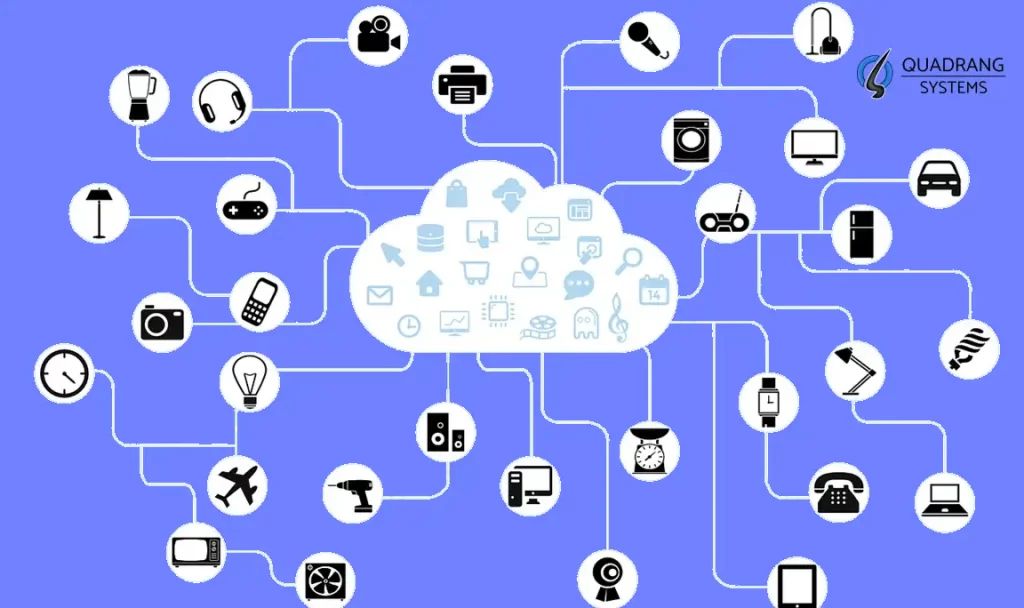
Networks 101: The Invisible Backbone of Life in 2026
Connectivity is no longer a convenience. It is infrastructure, as essential as electricity, water and roads. What began with telegraphs and telephones, and later passed through screeching dial-up modems on copper wire, has grown into a planetary web of fibre optic cables, subsea routes, 5G towers, Wi-Fi 7 routers and low-earth-orbit satellite constellations. According to the International Telecommunication Union (ITU), more than five billion people, roughly two-thirds of humanity, are now online.
The Covid-19 pandemic showed how much society leans on the network. Schools, offices, hospitals and shops moved online almost overnight. In 2026, that shift is permanent. AI assistants, connected factories, digital public services and instant payments all assume a network that is always available. When it fails, work stops, money stops moving and services go dark.
Who Owns the Internet?
The internet is a public “network of networks.” No country, company or individual owns it. Tens of thousands of independent operators, known as autonomous systems, interconnect voluntarily using shared standards such as TCP/IP and BGP. That decentralised design is what makes the internet global and resilient.
The services that run over it are another matter. They are governed by national and local laws, including data protection rules, content regulations and, in some places, temporary or permanent censorship, whether full or partial. India’s Digital Personal Data Protection Act and the EU’s GDPR are two examples of rules that shape how networks and applications handle personal data.
The monthly bills we pay to Internet Service Providers (ISPs) fund the cables, towers, data centres and engineers that keep this shared resource running. Today, more than 95 percent of intercontinental traffic travels through undersea fibre cables, so a single cable cut in the wrong place can slow down an entire region.
Keeping the Lights On: The Role of the NOC
Networks break. Fibre gets cut by construction crews, routers fail, configurations drift, traffic surges and attackers probe for weaknesses. The difference between a minor blip and a headline-making outage is how quickly the problem is detected, diagnosed and fixed.
This is where we at Quadrang Systems play an essential role. We provide ISPs with Network Operations Centres (NOCs) and experienced network engineers. Our monitoring services detect faults early, often before customers notice, and our engineers are skilled in every kind of network and connectivity issue, from physical link failures to routing problems and performance degradation.
In 2026, modern NOC work goes well beyond watching dashboards. It increasingly relies on telemetry-based monitoring, automation of routine fixes, AI-assisted alert correlation to cut noise, and capacity analytics that predict congestion before it happens. The goal has shifted from repairing networks quickly to preventing the outage altogether.
The Internet and Globalisation
The internet is the key ingredient behind globalisation. Like pieces of a jigsaw puzzle, each IT-enabled service (ITeS) entered the market, matured and slotted into place, completing the picture of modern trade and commerce. Over the last few decades, technology companies have tirelessly built a vast range of such services.
Rather than a long list of forty items, it helps to see them in six groups. Together they show how deeply networks are woven into everyday life.
1. Communication, Community and Collaboration
Social media, forums and messaging
Social platforms, niche forums, interest-based groups and instant messengers connect billions of people. Messaging apps have also become business channels, handling customer support, bookings, payments and alerts. Dating, matrimonial and matchmaking platforms use the same networks to connect people, including those in long-distance relationships.
Remote work and collaboration
Video conferencing, VoIP calling, email, shared documents and project tools have made hybrid and remote work routine. Recruitment, freelance marketplaces, talent search and online interviews now happen largely online, so a company in one city can hire a specialist in another country within days.
Social activism and civic voice
As connectivity reached remote towns and villages, political engagement and social movements gained a platform that does not depend on traditional media. The same reach has made digital literacy and misinformation awareness essential civic skills.
2. Commerce, Money and Business Systems
Ecommerce and digital marketing
Online shopping, quick commerce, auctions, digital advertising, digital signage, surveys, polls and market research form an enormous digital marketplace. Global trading platforms let even small sellers reach customers across borders, while product and service reviews and ratings, for private and public entities alike, shape what people buy and whom they trust.
Banking, finance and payments
Banking, insurance, ATMs, bill payments, mobile wallets, currency and cryptocurrency trading, and stock markets all depend on fast, secure and highly available networks. India’s Unified Payments Interface (UPI) now processes upwards of twenty billion transactions a month, which shows how a network failure of even a few minutes can interrupt the daily lives of millions. This is why monitoring, redundancy and rapid response matter so much in this group.
ERP, POS and SaaS
Enterprise Resource Planning (ERP) systems, Point of Sale (POS) machines and billing software keep businesses organised. Software as a Service (SaaS) delivers CRM, accounting, HR and analytics through a browser. Because most companies now run a large share of their operations on cloud applications, the office network and internet link are as critical as any machine on the shop floor.
Betting and gaming
Online gaming, betting and gambling are network-driven industries. They are tightly regulated in many countries and demand low latency and strong security.
3. Smart Machines and Emerging Technology
Industrial IoT and home automation
The Industrial Internet of Things (IIoT) connects machines, devices, sensors and actuators. These systems sense conditions, transmit data to servers, act on triggers and perform actions, while the stored data is analysed by data engineers to improve efficiency. In factories, this enables predictive maintenance and quality control. At home, the same idea appears as smart lights, thermostats, appliances and voice assistants, which together make up home automation. In 2026, edge computing processes much of this data close to where it is generated, reducing delay and bandwidth costs.
Security and surveillance
Cloud-connected CCTV cameras and security alarms let owners monitor homes, shops and plants from anywhere. Because these devices sit on the network, they need regular patching and network segmentation so that they do not become entry points for attackers.
Artificial intelligence
Large language models (LLMs) and generative pre-trained transformers, popularised by tools like ChatGPT and Midjourney, have moved from novelty to everyday utility. In 2026, autonomous AI agents book, buy, code and research on behalf of users. All of this runs in data centres linked by high-capacity networks, and it reaches users only through the internet. As AI traffic grows, so does the demand for bandwidth, low latency and reliable interconnection.
Blockchain, Web 3.0 and the metaverse
Blockchain and Web 3.0 offer security and tamper-resistant records through decentralisation, with uses in payments, supply chains and digital ownership. The metaverse, once expected to change everything, has matured more quietly into practical virtual and augmented reality applications such as training, design, retail previews and remote assistance.
4. Media, Knowledge and Learning
Digital media and entertainment
Video sharing, streaming (OTT), music, podcasts and creator-led content only became mainstream because the internet spread so widely. News, blogs, vlogs, e-magazines, live sports and event broadcasts have largely replaced traditional cable and print habits, and weather tracking now reaches phones directly through satellites and the internet.
Education, research and knowledge
Edtech platforms offer live classes, online courses, tests and exams. Scientific research papers, journals, patent listings and prior-art searches are available in seconds. Old books and records have been digitised into online libraries, e-books and audiobooks. DIY tutorials teach almost any skill, online translation and transliteration remove language barriers, and general infotainment feeds curiosity beyond formal study.
5. Everyday Life and Local Services
Travel, transport and logistics
Hotel stays, train, flight and bus tickets, taxi hailing, ride-sharing and transport vehicle bookings all happen in an app. Behind them sit logistics, shipping and last-mile delivery networks that are tracked in real time.
Food, maps and local discovery
Online food ordering with live delivery tracking, location-based maps with path finding and navigation, and local search for services, classifieds and meetup events make daily life more convenient.
Real estate
Listing and searching properties to rent, lease, buy and sell, along with online property registration, have moved from brokers’ offices to screens.
6. Public Services, Health and Safety
Government and legal services
Income tax filing, validation, payments and returns, access to municipal services, and complaints about infrastructure and government services are now largely digital. Online legal advice and law awareness also help prevent violations of the law.
Healthcare
Online consultations, first-aid guidance, precautions, nutritional information, fitness resources and clinic management software expand access to care, especially for people far from specialists. Because these systems handle sensitive personal data, privacy and security matter as much as uptime.
Emergencies, crises and calamities
During floods, cyclones, earthquakes and other crises, networks carry early warnings, coordinate rescue efforts and help families find each other. Satellite-enabled alerts and mobile broadcasts have made disaster response faster and more targeted.
What Has Changed Since 2023?
Several shifts define the networks of 2026:
- AI is everywhere. It generates content, automates customer support and increasingly helps operate networks themselves.
- Coverage keeps widening. 5G, fibre-to-the-home and satellite broadband are reaching places that cables never did.
- Security is non-negotiable. Zero-trust architectures, stronger encryption and stricter data protection laws are now standard expectations.
- The edge matters. Processing data near users and devices keeps critical systems fast and responsive.
- IPv6 adoption continues. More devices than ever need addresses, and IPv6 has become the long-term answer.
Conclusion: Networks Are the Quiet Backbone
Overall, networks have become an essential part of daily life, connecting people, devices and information in every corner of our personal and professional lives. Every service described above, from a family video call to a stock trade to a remote medical consultation, depends on a network that works.
At Quadrang Systems, we enable Internet providers to keep their networks online and running, minimise disruptions and repair broken networks within committed timelines through our NOC services and network engineers. We also develop software applications and systems that put these internet and IT-enabled services to work for businesses. Whether you are an ISP seeking dependable network operations or a company planning your next digital product, we would be glad to talk.


